
From Resistance to Feedback
Overcoming the Four Frictions That Impede Progress


Understanding human psychology and motivation in educational settings reveals that sustainable change requires more than just a compelling vision or strong leadership (or “superhero leadership”). As we consider how to create environments where intrinsic motivation can flourish and where both students and teachers can experience the natural joy of learning and growth, we must carefully address the four key frictions that often impede progress:
Inertia - resistance to departing from established practices.
Effort - the real and perceived work of implementing change.
Emotion - personal fears and uncertainties about change.
Reactance - pushback against perceived threats to autonomy.
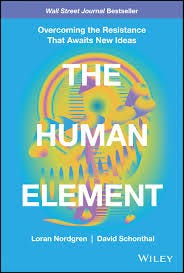
Loran Nordgren and David Schonthal identified these frictions in their 2002 book The Human Element: Overcoming the Resistance That Awaits New Ideas. Their work helps explain why even changes that align with our deepest shared values about teaching and learning often face significant resistance. By understanding and systematically addressing these frictions, school leaders can create the conditions necessary for the kind of transformation that nurtures rather than diminishes the innate human drive to learn and grow.
Overcoming Inertia: School leaders can systematically overcome institutional inertia by starting with carefully orchestrated small victories. Rather than announcing sweeping reforms, successful change begins with targeted pilot initiatives that demonstrate clear benefits in contained environments. For example, a school transitioning to standards-based grading might begin with a single department or grade-level team, allowing others to observe the process and outcomes. These early adopters become natural ambassadors for change, sharing authentic stories of both challenges and successes that resonate more deeply than theoretical arguments for reform.
The key to breaking inertia lies in making explicit connections between new initiatives and existing values and practices. Instead of positioning changes as revolutionary breaks from tradition, influential leaders help stakeholders see how new approaches evolve naturally from current strengths while addressing acknowledged pain points. A school moving toward project-based learning, for instance, might begin by identifying where teachers already incorporate authentic problem-solving in their practice, then building from these familiar foundations toward more comprehensive implementation.
Minimizing Effort: To address the friction of effort, successful leaders first invest heavily in building robust support structures before launching significant initiatives. This begins with careful attention to timing and pace. Introducing major changes during periods of relative stability rather than adding to existing stress points in the school year is helpful. Professional development moves beyond traditional workshop models to include job-embedded coaching, peer observation networks, and dedicated collaboration time. For example, when introducing new assessment practices, leaders might create release time for teachers to work together to redesign rubrics and calibrate their evaluations.
Equally important is the strategic reduction of competing demands. Rather than adding new initiatives to existing workloads, effective leaders audit current practices and intentionally eliminate or streamline procedures that no longer serve core purposes. This might mean temporarily suspending certain committee obligations, simplifying documentation requirements, or providing additional planning time by creatively restructuring schedules. The goal is to create genuine capacity for meaningful change rather than simply expecting more from already stretched educators.
Addressing Emotional Friction: The emotional dimension of change requires leaders to invest deeply in relationship-building and creating psychological safety. This begins with regular, informal conversations that allow staff to voice concerns without fear of judgment. Leaders must model vulnerability by sharing their own uncertainties and learning experiences. When implementing new instructional technologies, for instance, leaders might share stories of their own technical struggles and learning curve, normalizing the challenges that come with professional growth.
Creating emotional safety also requires rethinking how we measure and discuss progress. Rather than focusing solely on implementation deadlines or performance metrics, effective leaders create opportunities to celebrate effort, risk-taking, and incremental improvements. This might include regular sharing sessions where teachers can discuss both successes and setbacks, peer mentoring relationships that provide emotional support alongside technical guidance, and public recognition of teachers who embrace learning opportunities, regardless of immediate outcomes.
Mitigating Reactance: Successful leaders focus on creating genuine ownership rather than mere buy-in to address reactance. This begins with involving staff in the earliest stages of change planning, using protocols and processes that ensure all voices contribute to shaping initiatives. When developing new curriculum frameworks, for example, leaders might establish working groups that include teachers from different grade levels and content areas, ensuring diverse perspectives shape the final product.
Maintaining clear boundaries while maximizing choice within those parameters is the key to preventing reactance. Rather than mandating specific instructional approaches, effective leaders identify non-negotiable outcomes while empowering teachers to determine the best paths to those goals for their specific contexts. This might mean establishing common learning objectives but allowing teachers to design their own instructional sequences or setting school-wide assessment policies while enabling grade-level teams to develop specific implementation strategies.
Successful navigation of the four frictions requires systematic attention to organizational learning and growth. Leaders must create feedback loops that allow them to monitor how changes are experienced at different levels of the organization. This might include regular pulse surveys, focus groups, and informal check-ins that help identify emerging friction points before they become significant barriers.
The ultimate goal is to create an organizational culture that views change not as a series of initiatives to be implemented but as a natural part of professional growth and development. By systematically addressing the frictions of Inertia, Effort, Emotion, and Reactance, leaders can transform resistance from a barrier to be overcome into valuable feedback that guides more effective and sustainable change processes.
- Dr. Steven Lyng / gofourthlearn.com
Reference:
Nordgren, Loran F, and David Schonthal. The Human Element: Overcoming the Resistance That Awaits New Ideas. Hoboken, New Jersey, John Wiley & Sons, Inc, 2022.